ISHN logo
search
cart
facebook twitter linkedin youtube
  • Sign In
  • Create Account
  • Sign Out
  • My Account
ISHN logo
  • NEWS
    • Today's News
    • Global Safety News
    • Government Regulations
  • PRODUCTS
    • Product Innovations
    • Featured Products
  • TOPICS
    • Environmental Health and Safety
    • Facility Safety
    • Workplace Health
    • Occupational Safety
    • PPE
    • More Topics
  • CONSTRUCTION
  • TECHNOLOGY
  • COLUMNS
    • Best Practices
    • Dave Johnson: What’s going on
    • Editorial Comments
    • Leading Safety
  • MULTIMEDIA
    • ISHN Podcast
    • Videos
    • Cold Stress Education Quiz
    • Webinars
    • White Papers
  • MORE
    • Buyer's Guide
    • Newsletters
    • Convention Companion
    • Polls
    • Events
    • ISHN Store
    • Sponsor Insights
  • EMAGAZINE
    • eMagazine
    • Archived Issues
    • Contact
    • Advertise
  • JOIN TODAY!
Today's Safety NewsEnvironmental Health and SafetyColumnsSafety Industry White PapersSafety & Health Best Practices OSHA Workplace Safety CultureWorkplace Training Strategies Psychology in the Workplace

‘Safety culture’ is a messy concept

Too many interpretations lead to haphazard applications

By Timothy Ludwig Ph.D.
workplace safety training
October 4, 2018

The term “Safety culture” has become like the term “engagement” in popular management writings. There is no common agreement on the term. 

We are left with (mis)interpretations of terms like “safety culture,” which lead to haphazard attempts at changing organizations toward improvement. Thus, the term has been begun to diffuse into meaninglessness like so many good-ideas-turned-fad before. This is too bad because the real concept of safety culture is profound and can lead to significant improvements.

I’m a psychologist so I’m used to being around terms constructed to describe things that are not concrete. The term “culture” has been over-studied in industrial/organizational psychology and all we are left with is an argument over the difference between “culture” and “climate.” Even as a psychologist, I have had a big problem getting my arms around what a “culture” is.  For me the best definition was putting a swab of spit in a petri dish and see what grows.

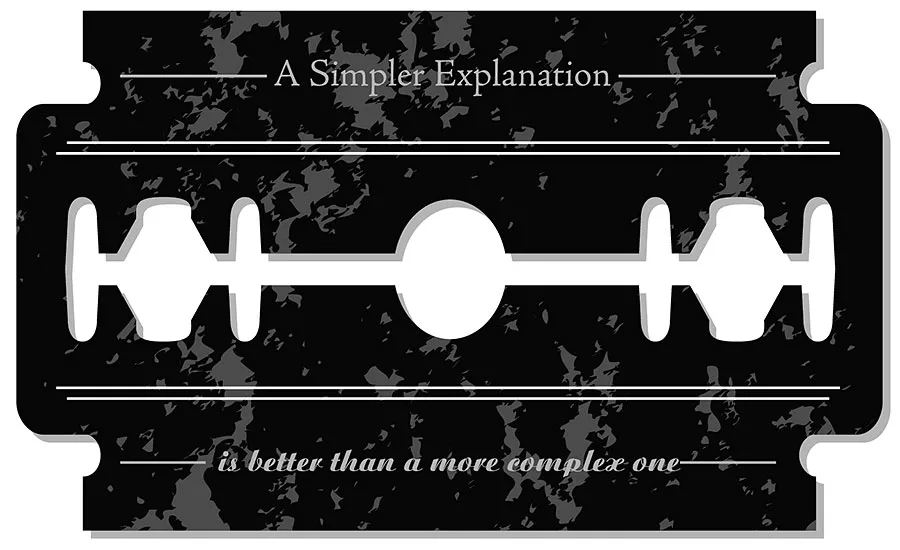
However, as a behavioral psychologist, parsimony is the goal. When we shave away the fluff from terms like “safety culture” with a tool like Occam’s Razor we end up with an extensively more useful concept.

Definition of Occam’s Razor

“Entities should not be multiplied unnecessarily. The simplest of competing theories be preferred to the more complex. Explanations of unknown phenomena be sought first in terms of known quantities.”                -- Merriam-Webster Dictionary

It’s all in the conversation

Let’s try this on for size: Safety culture is how people talk to each other and how that talking impacts safety behaviors.  

  • Consider the employee telling another about a short cut to a task that involves risk -- the culture influences risk.  
  • Consider a supervisor who emphasizes speed in getting a piece of equipment back on line -- the culture influences risk.  
  • Consider a leader who tells subordinates to push the equipment upgrades off for yet another year to save costs -- the culture influences risk.  
  • Alternatively, when an employee takes a moment to alert another employee when they are taking a risk -- the culture influences safety.  
  • When a supervisor asks his work team about the potential hazards in a job and discusses the safe behaviors that mitigate the hazards -- the culture influences safety.  
  • When a leader asks his subordinates about the safety implications of budget decisions -- the culture influences safety.

Management systems = verbal behaviors

Note that this happens through all levels of the organization. It is not necessarily top-down or bottom-up. It can be motivated with programs like People-Based Safety where the whole point is getting employees to talk to each other about risk. There are solid management programs like LEADS that focus on leadership verbal behaviors.  

Note also that safety management systems are just formalized methods of communication:  

  • Minor Injury/Close Call reporting = talking about incidents that happened instead of hiding them; 
  • Safety Procedures = written talking about safe behaviors on a job; 
  • Training = talking, alot; 
  • Discipline = telling employees the consequences of their actions; etc...  

The question here is: how effectively are these systems talking to your employees and managers?

Talk it up

The verbal behaviors that can create a positive safety culture are reinforced just like any other behavior. You reinforce when people talk about safety, report minor incidents, and point out risk. Do this and these behaviors increase. When these verbal behaviors increase, they happen more in the work site. When more safety talking occurs then more people will try it themselves, modeling those who do. They, in turn, will get reinforced by this emerging safety culture and the safety talking builds and builds.  

Most importantly, data shows that talking to someone about safety can help change their behavior. But most, most importantly, talking to someone about safety makes it 2X more likely that you’ll change your own behavior.

Why mess with a messy concept of safety culture. Instead, cut the fat and recognize safety culture for what it is -- people influencing each other by talking.  With this recognition comes a definition we can do something with, something we can operationalize into useful tactics to reduce injuries.

So “Talk the Talk”!

"Plurality must never be posited without necessity."— William of Ockham (1285 -1349)

KEYWORDS: employee safety safety and health management

Share This Story

Looking for a reprint of this article?
From high-res PDFs to custom plaques, order your copy today!

Timothy Ludwig’s website is Safety-Doc.com where you can read more safety culture stories and contribute your own. Dr. Ludwig consults and serves as a commissioner for Behavioral Safety Accreditation at the non-profit Cambridge Center for Behavioral Studies (CCBS: behavior.org) and teaches behavioral psychology at Appalachian State University, in Boone, NC. If you want Tim to share his stories at your next safety event you can contact him at TimLudwig@Safety-Doc.com.

Recommended Content

JOIN TODAY
to unlock your recommendations.

Already have an account? Sign In

  • forklift safety

    Exploring the latest technologies in forklift safety

    With more staff and more stock in warehousing now more...
    Facility Safety
    By: Josh Cramer
  • welding

    All about welder’s flash or arc eye

    A flash burn is a painful inflammation of the cornea,...
    Environmental Health and Safety
  • dangerous jobs

    The 10 most dangerous jobs in the U.S.

    On-the-job deaths have been rising — hitting the highest...
    Construction Industry Safety and Health
    By: Benita Mehta
Manage My Account
  • eMagazine Subscriptions
  • ISHN Newsletter & Other Newsletter Alerts
  • Online Registration
  • Manage My Preferences
  • Subscription Customer Service

More Videos

Sponsored Content

Sponsored Content is a special paid section where industry companies provide high quality, objective, non-commercial content around topics of interest to the ISHN audience. All Sponsored Content is supplied by the advertising company and any opinions expressed in this article are those of the author and not necessarily reflect the views of ISHN or its parent company, BNP Media. Interested in participating in our Sponsored Content section? Contact your local rep!

close
  • man wearing the the Sundström SR200 Full Face Mask Respirator
    Sponsored byOHD

    5 Fit Testing Mistakes That Could Cost You

  • This image shows Magid AcuSpex polarized blue mirrored safety glasses.
    Sponsored byMagid Glove and Safety

    Construction PPE Guide: What Crews Need for Each Task

  • lone worker in confined space
    Sponsored byAlphasense Ltd.

    GET THE LEAD OUT of your Safety Oxygen Sensors!

Popular Stories

SpaceX 7 launch

OSHA Investigating Fatal Fall at SpaceX Starbase

Automated loading dock equipment

After March 2026 Rivian Death, Safety Managers Reassess Loading Dock Systems Under OSHA's Warehouse Emphasis Program

psychology in the workplace

Most Workplaces Measure Psychological Safety, Ignoring Psychosocial Risks

top 10 most dangerous jobs

Poll

Seasonal Readiness

With the federal heat stress prevention rule on the horizon, which area of your safety program needs the most attention?
View Results Poll Archive

Products

Surviving an OSHA Audit A Management Guide, 2nd Edition

Surviving an OSHA Audit A Management Guide, 2nd Edition

See More Products

ISHN Podcasts

Related Articles

  • “Amtrak’s safety culture is failing”

    See More
  • PSU culture: It is a corporate entity

    See More
  • “Safety Culture” needs a shave: Get talking

    See More

Related Products

See More Products
  • 1119772133.jpg

    Delivering Safety Excellence: Engagement Culture at Every Level

  • 9781138749573.jpg

    Occupational Health and Safety Management: A Practical Approach, Third Edition

  • 9780367861148.jpg

    LEAD Safety A Practical Handbook for Frontline Supervisors and Safety Practitioners

See More Products
×

Become a Leader in Safety Culture

Build your knowledge with ISHN, covering key safety, health and industrial hygiene news, products, and trends.

JOIN TODAY
  • RESOURCES
    • Advertise
    • Contact Us
    • Directories
    • Manufacturing Division
    • Store
    • Want More
  • SIGN UP TODAY
    • Create Account
    • eMagazine
    • Newsletters
    • Customer Service
    • Manage Preferences
  • SERVICES
    • Marketing Services
    • Reprints
    • Market Research
    • List Rental
    • Survey/Respondent Access
  • STAY CONNECTED
    • LinkedIn
    • Facebook
    • YouTube
    • X (Twitter)
  • PRIVACY
    • PRIVACY POLICY
    • TERMS & CONDITIONS
    • DO NOT SELL MY PERSONAL INFORMATION
    • PRIVACY REQUEST
    • ACCESSIBILITY

Copyright ©2026. All Rights Reserved BNP Media, Inc. and BNP Media II, LLC.

Design, CMS, Hosting & Web Development :: ePublishing